Things Worth Stealing from the Internet
TL;DR: Ask embarrassing questions. Make better things. Pay attention to people.
I have a folder on my desktop called “Q2 Learnings.” It contains screenshots of tweets, things I've read, conversations, and notes I've written to myself, usually with a filename explaining why I thought they mattered.
Some filenames are quite useful. “Give ppl attention.” “Good things take time.” “Make good stuff not slop.”
Others are “based asf” and “straight up bars.” Extremely rigorous knowledge management happening over here.
Looking through all of it, I noticed how often I was saving different versions of the same idea. Sometimes I would read something, highlight it, screenshot it, and then write essentially the same thing in my own notes a few weeks later.
Clearly, agreeing with a lesson and actually learning it are two very different things.
These are the ideas I keep coming back to. Some have changed how I think. Some are things I'm still trying to get myself to do.
1. Action produces information.
Less a new lesson, more a reminder I keep needing.
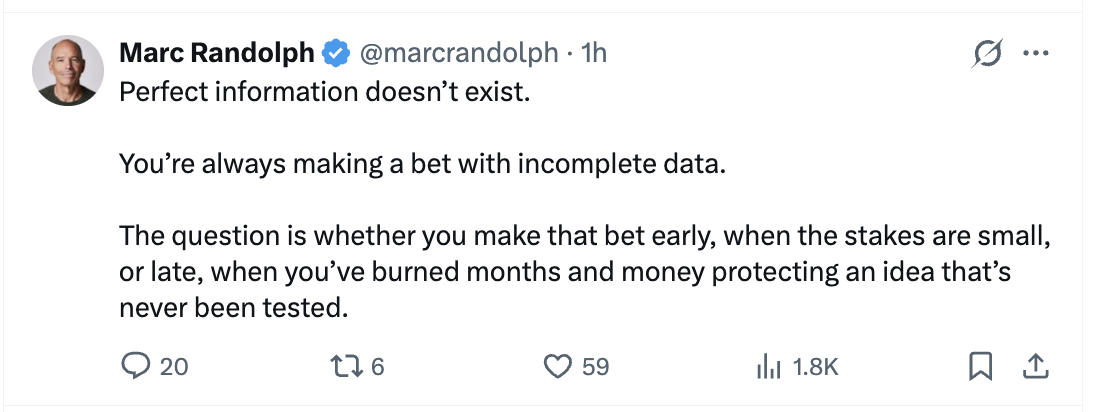
Marc Randolph on testing an idea while the stakes are still small.
2. I want to make more embarrassing asks.
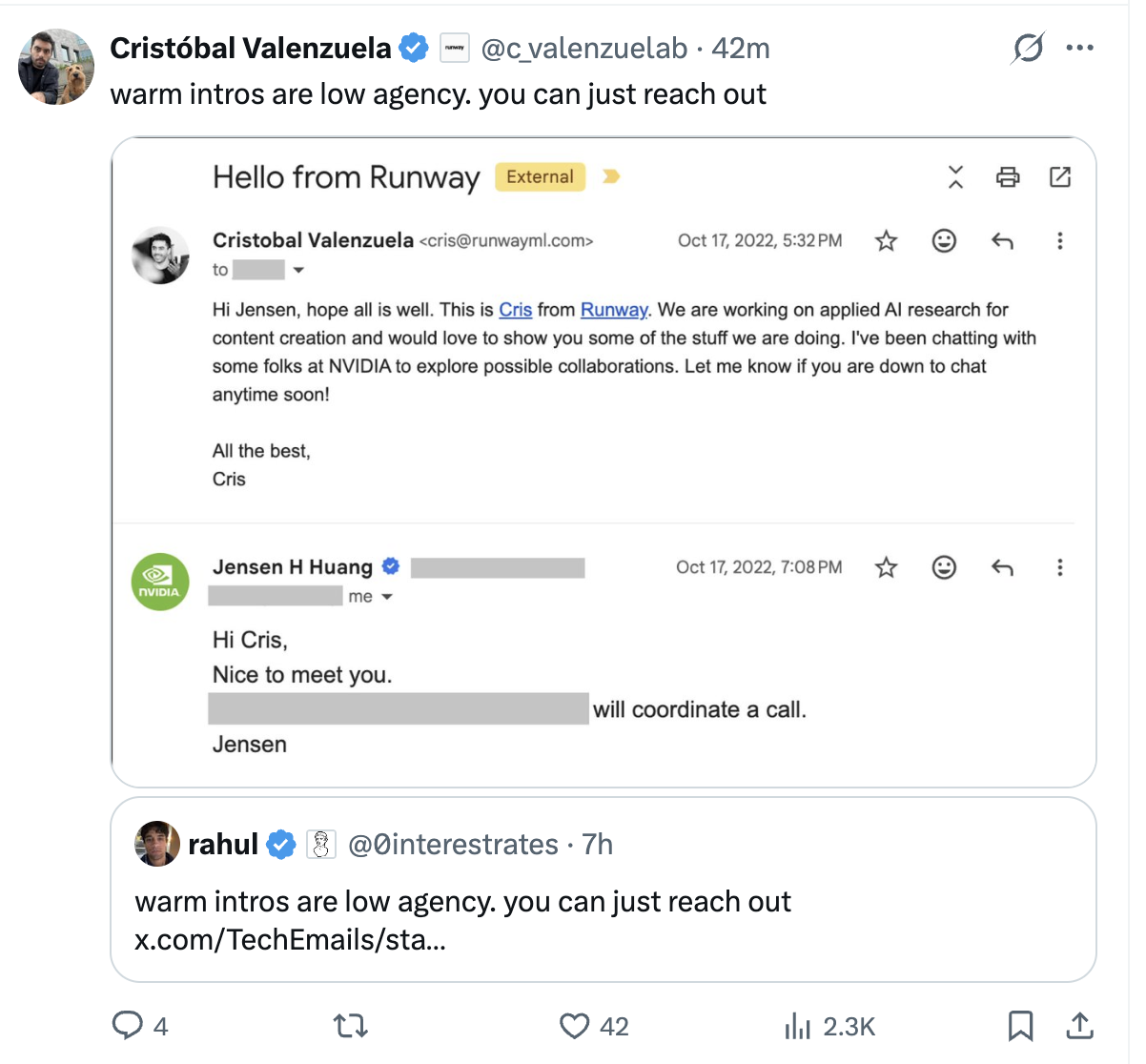
A saved example of reaching out directly: Cris from Runway emailing Jensen Huang.
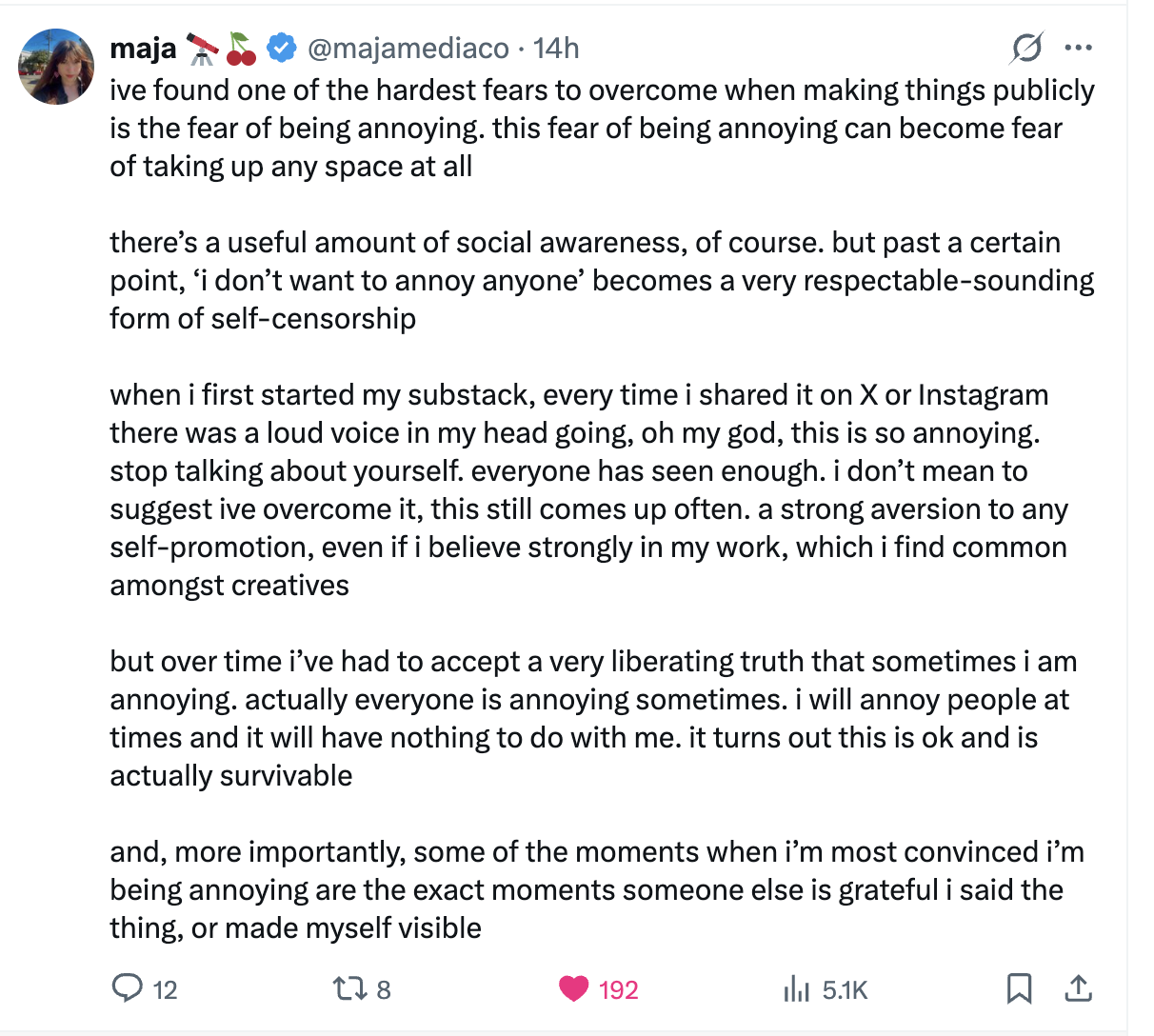
Maja on the fear of being annoying when sharing your work.
3. Good ideas are king.
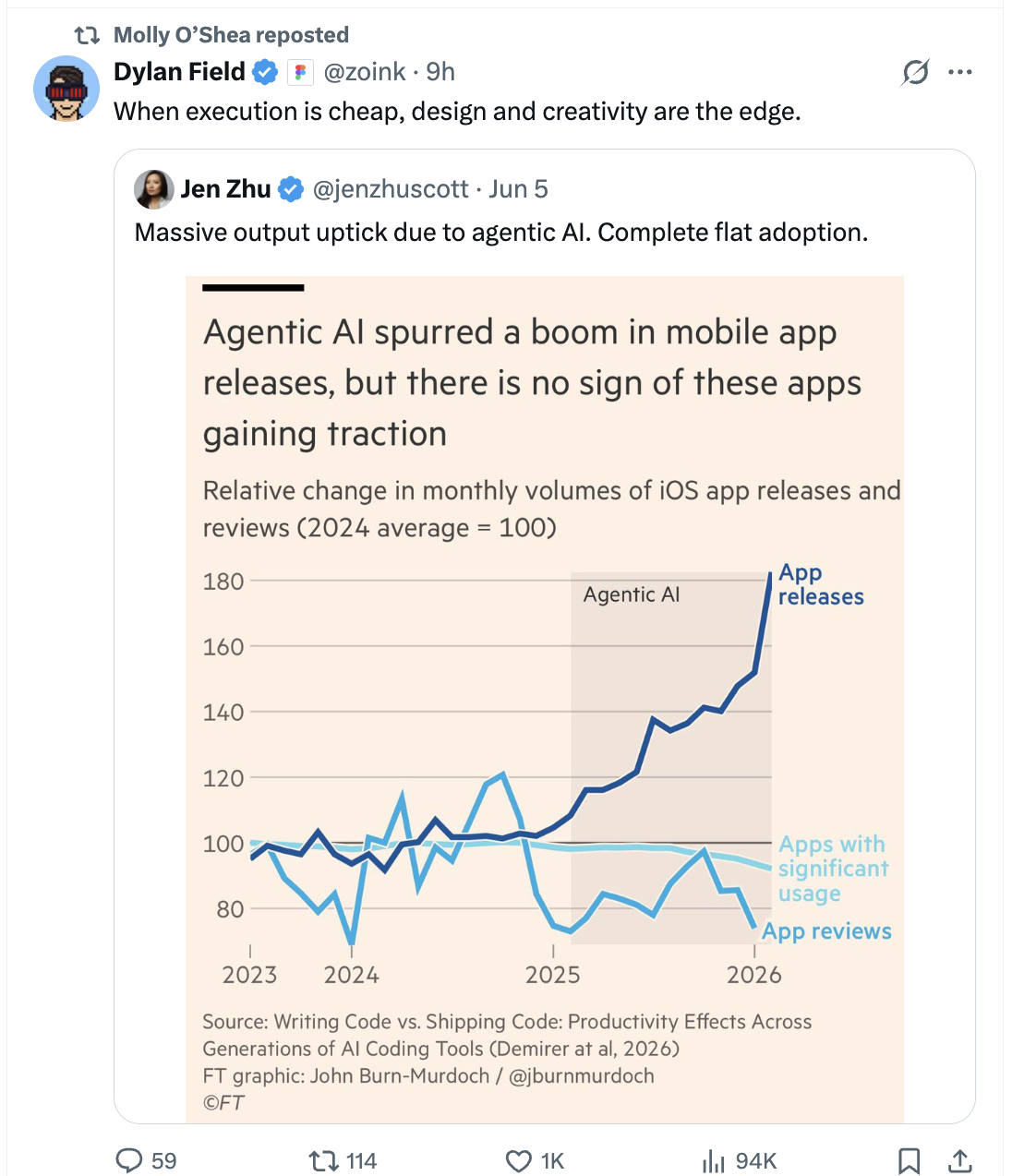
The screenshot I saved as “make good stuff not slop.”
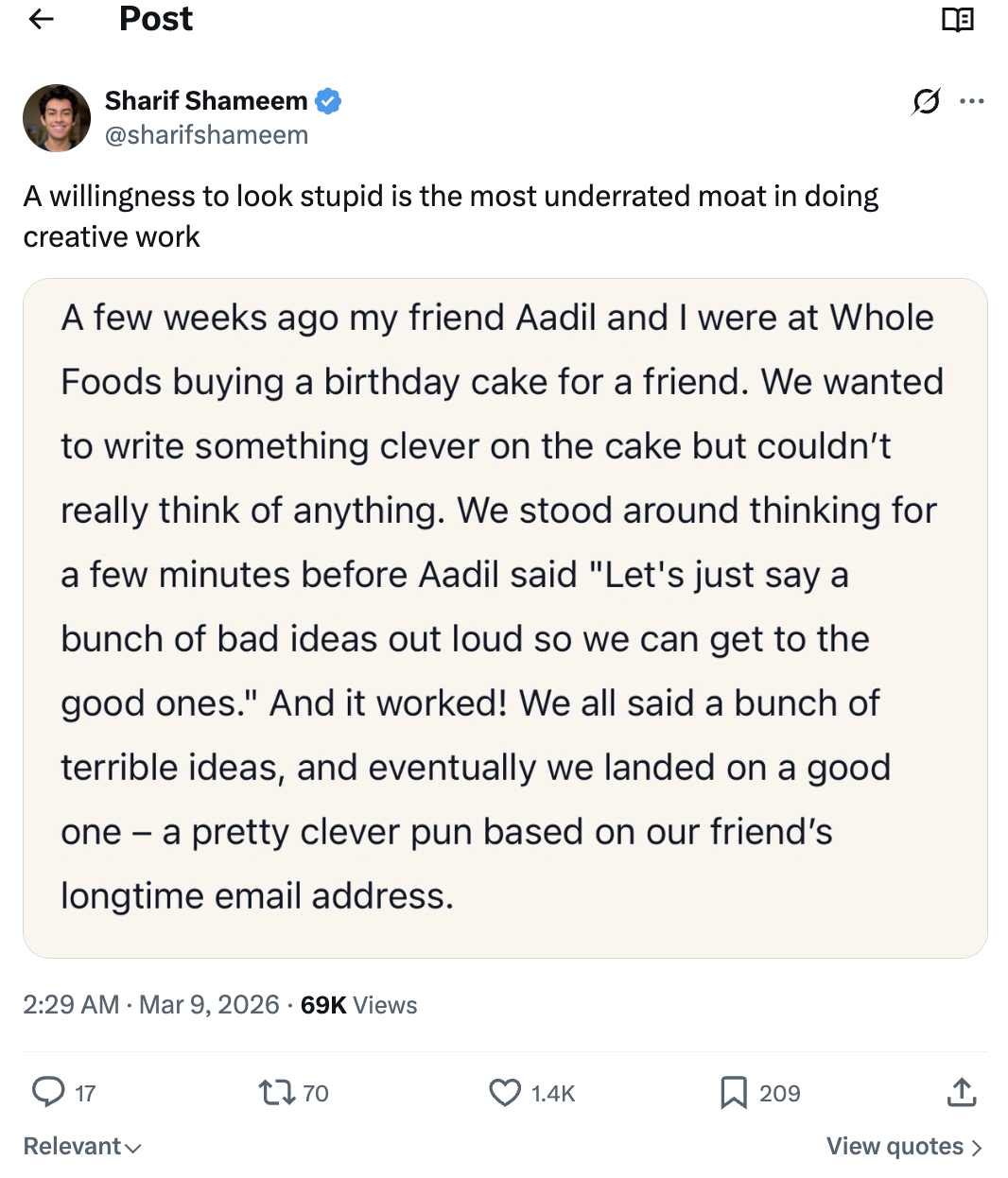
Sharif Shameem on saying the bad ideas out loud to get to the good ones.
4. Making people care is part of making the thing.
Another note adds to this: “the book cover and good clothing is not just vanity.”
The screenshot underneath it is about helping an idea reach people. A title. An opening sentence. An image. A way for someone to understand why they should give you the next minute of their attention.
I think both lessons belong together. The work has to be good, and people have to find a way into it.
I've also been thinking about how much people buy the feeling around a product. What owning it says about them. Who else uses it. The future version of themselves they imagine when they look at it.
I spoke to an Uber driver in India who wanted to become a travel vlogger. He had saved $100 a month for four months to buy a used iPhone. I ended the note with “Apple is truly insane.” That is Apple's genius.
What interested me was how the object sat inside a much larger picture of the life he wanted. I can't reduce his purchase to one motive, but the conversation made the question feel much more real than an abstract discussion about branding.
Another screenshot is named “sell a feeling not the product.” Others are about luxury design, memorable bios, and how media can make someone feel both smart and culturally relevant.
The practical lesson for me is to care about the details through which people first encounter the work. Use language they understand. Give them an image they can hold in their head. Create some tension. Write like I'm talking to a person.
An interesting idea deserves a better introduction than a paragraph nobody wants to finish.
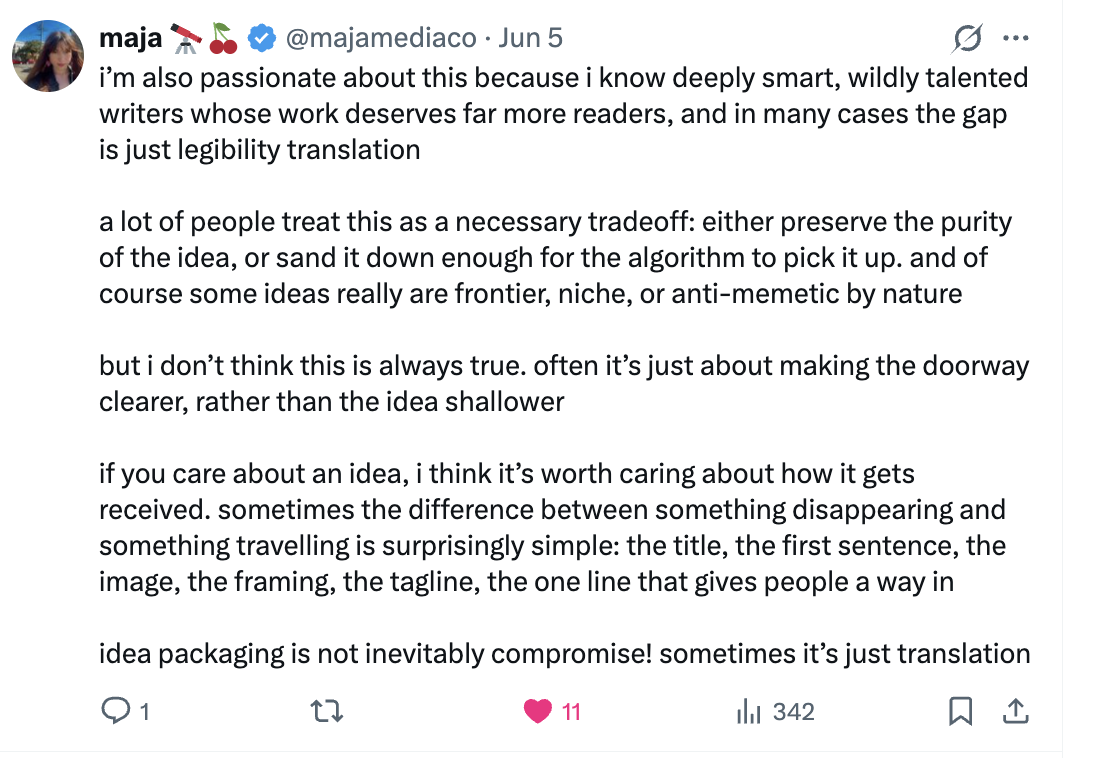
The post I saved as “the book cover and good clothing is not just vanity.”
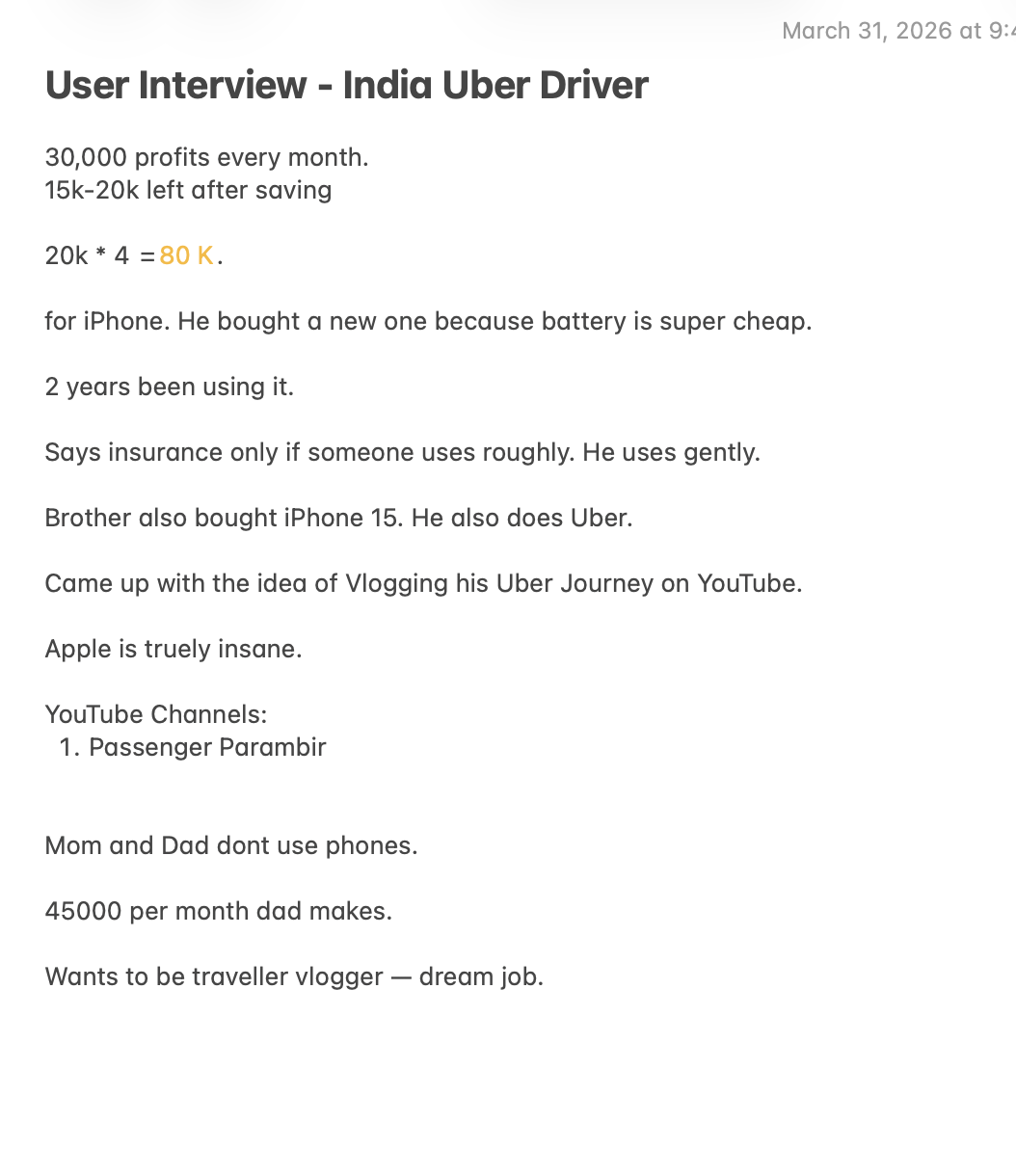
My notes from talking with an Uber driver about his iPhone and ambitions to vlog.
5. AI makes me more interested in culture.
The more I look at AI, the more curious I become about the things around the technology: taste, trust, identity, distribution, and what people actually want to spend their time with.
One of my filenames says, “culture creation will make money.” The passage underneath it argues that when production becomes more abundant, attention and the relationship with the audience become more important.
That is a big part of what I'm trying to understand.
If it gets easier to make a film, an app, or a beautiful image, there will be more of them. I still have to answer why someone should care about mine.
I also saved material about anger toward AI and how differently it is experienced outside the people I spend most of my time around.
I want to understand both the person who feels newly capable because of these tools and the person who feels their future is being taken away. The second person is not going to be persuaded just because I show them a better demo.

The passage I saved as “culture creation will make money.”
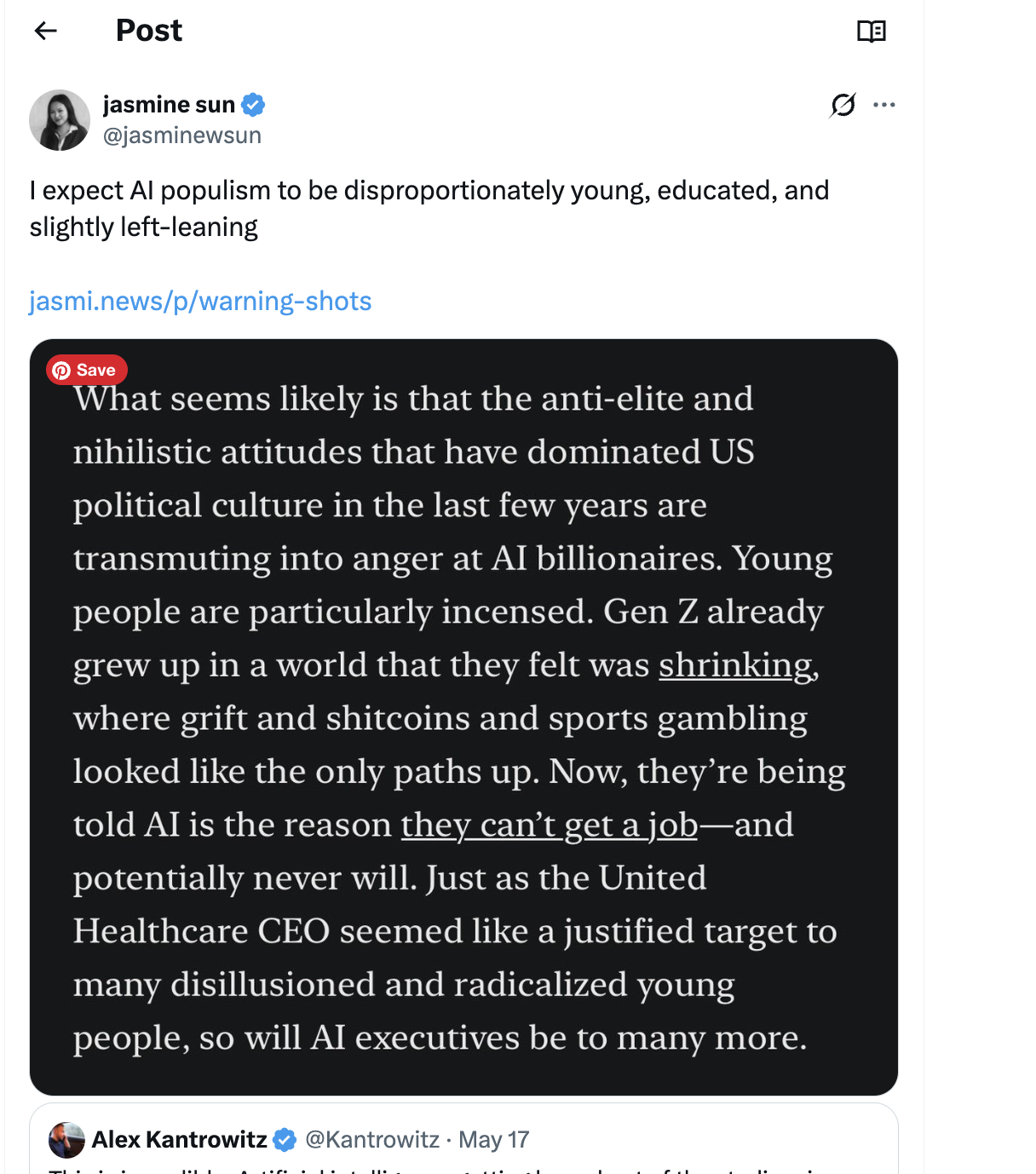
A saved perspective from Jasmine Sun on resentment toward AI.
6. Good things take a lot of boringness.
That is my wording, saved in a note on August 22.
I like it because “be patient” sounds quite elegant. “A lot of boringness” is closer to what patience actually asks of you.
The question I want to ask more often is whether the work I'm doing today gives tomorrow's work a better starting point.

My note: good things take time and boringness.
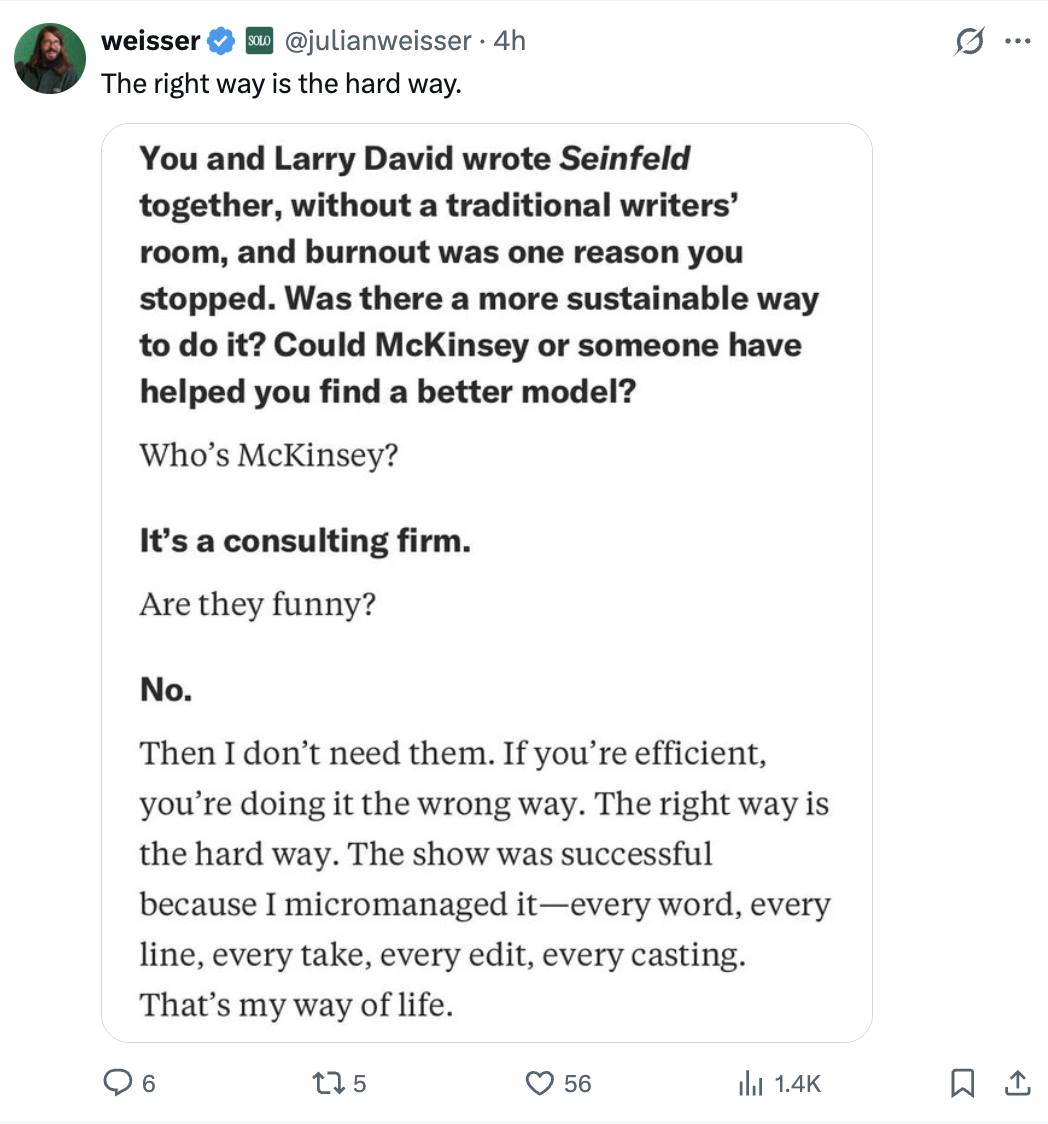
The saved Seinfeld interview excerpt about the painstaking work behind a good show.
7. People are worth more attention than my networking strategy.
I have notes about being likable, negotiating, recruiting, and starting conversations. At one point, I wrote that it would be fun to work as a barista for a week and test which ways of interacting with people produced the most tips.
Apparently, I cannot even imagine making somebody a coffee without designing an experiment around it.
But the reminders I keep liking most are much simpler.
Give people attention. Don't look around for someone else while they're talking. Don't immediately start bitching about another person when you've just met someone. Be responsive. Do something considerate without making them manage the entire process.
I saved a post about taking a small decision off someone's plate as a way of showing love. It made me think about how often being helpful means noticing something and handling it.
There are also several reminders to do things with people instead of only scheduling coffee chats. Walk. Go somewhere. Make something. Have a dinner that doesn't need to turn into a professional exchange.
I wrote down a line about how some parts of you only emerge with certain people.
I really like that idea. It makes choosing who to spend time with feel like more than choosing company. Which version of me becomes possible around this person? Do I become more curious, more generous, more alive?
Those seem like worthwhile things to notice.
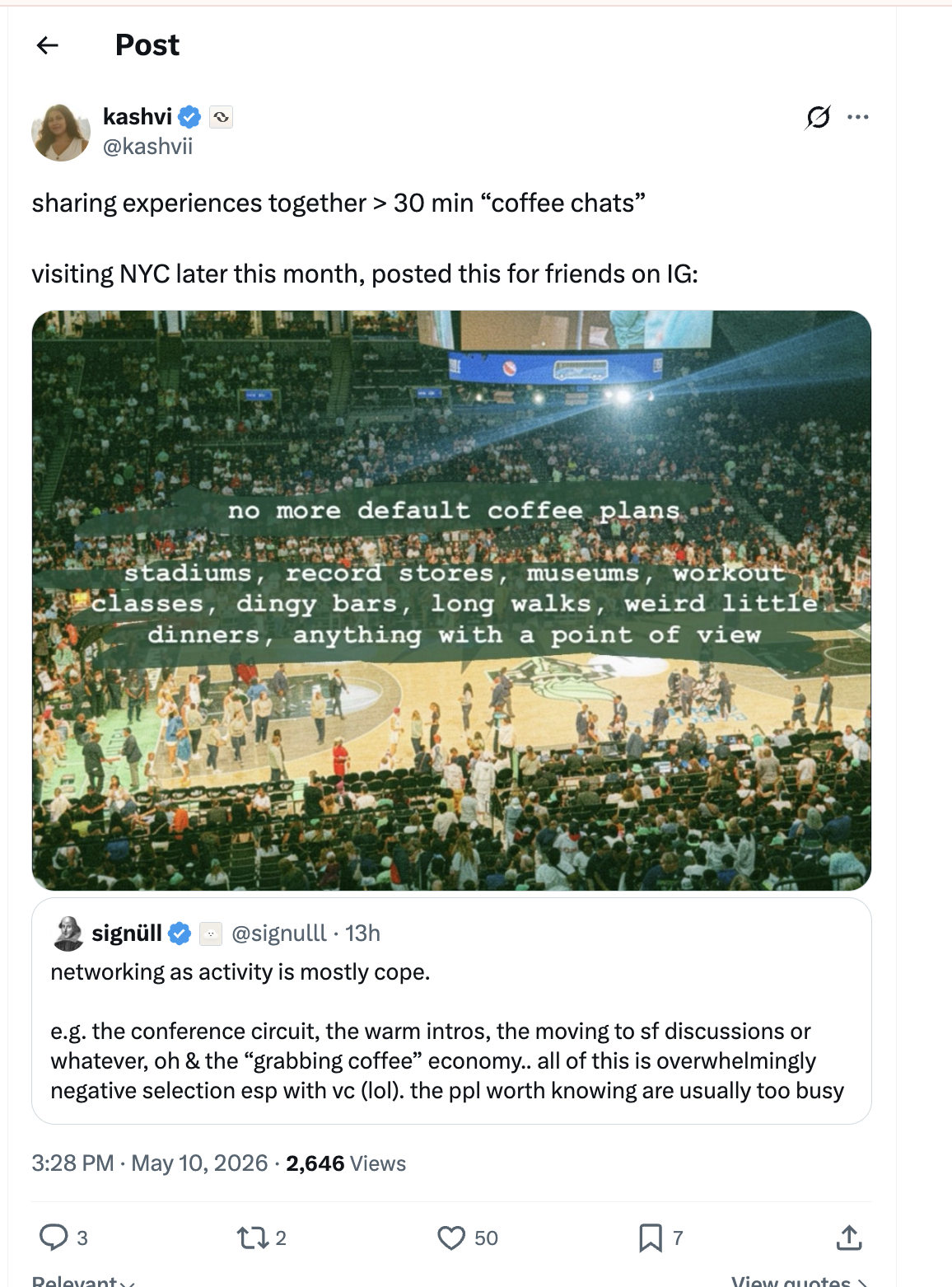
The post I saved as “have other ways than coffee chatting.”
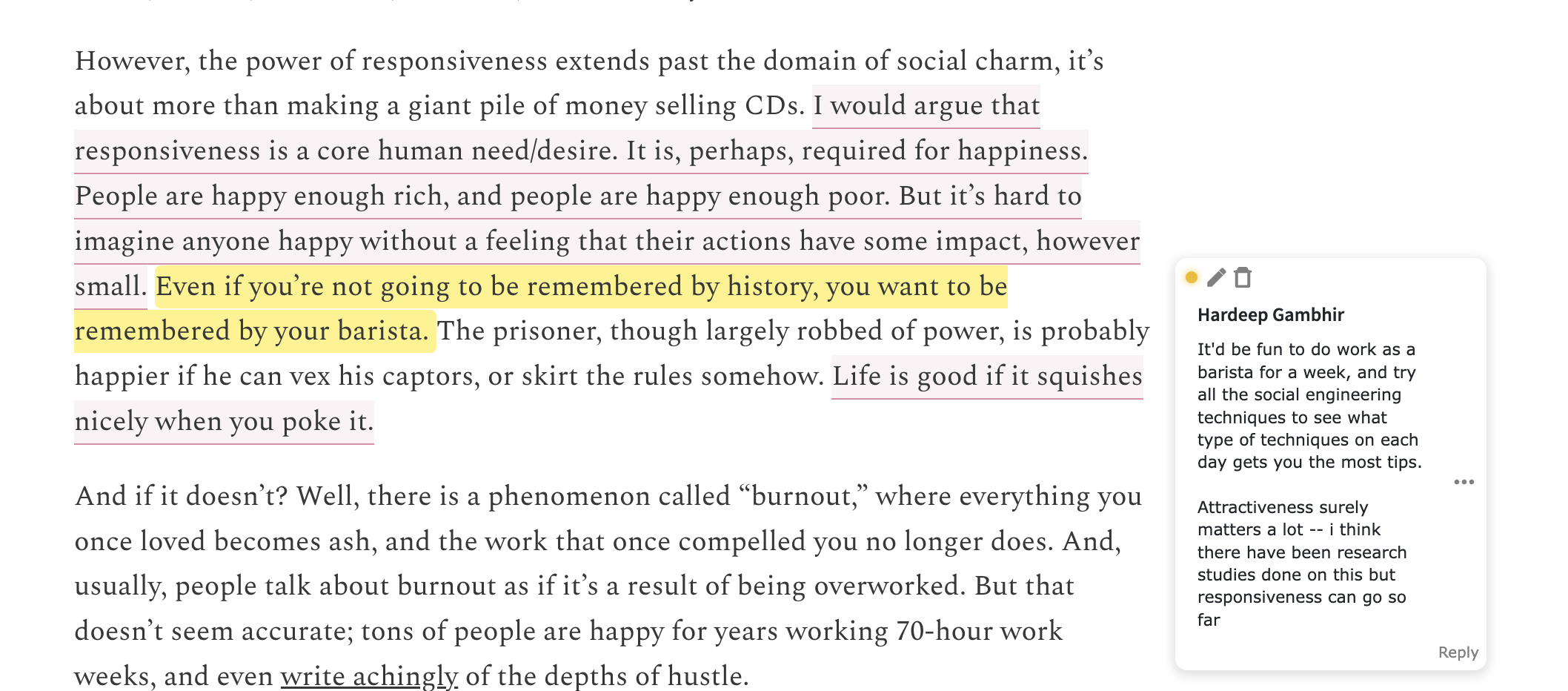
A passage on responsiveness, with my barista experiment idea in the margin.
8. I need time when nothing is asking for my attention.
For someone who cares so much about ideas, I can be very committed to filling every available gap with somebody else's.
A video while eating. A podcast while walking. Messages between tasks. Another thing to read because it might be useful.
Several things I saved come back to boredom and unstructured time. Giving the mind a chance to wander without immediately giving it another input.
That seems worth taking seriously. I can't expect an original thought to politely interrupt the seventeenth piece of content I've consumed that morning.
It is hard to give anything your full attention when you've promised the same hour to everything else.
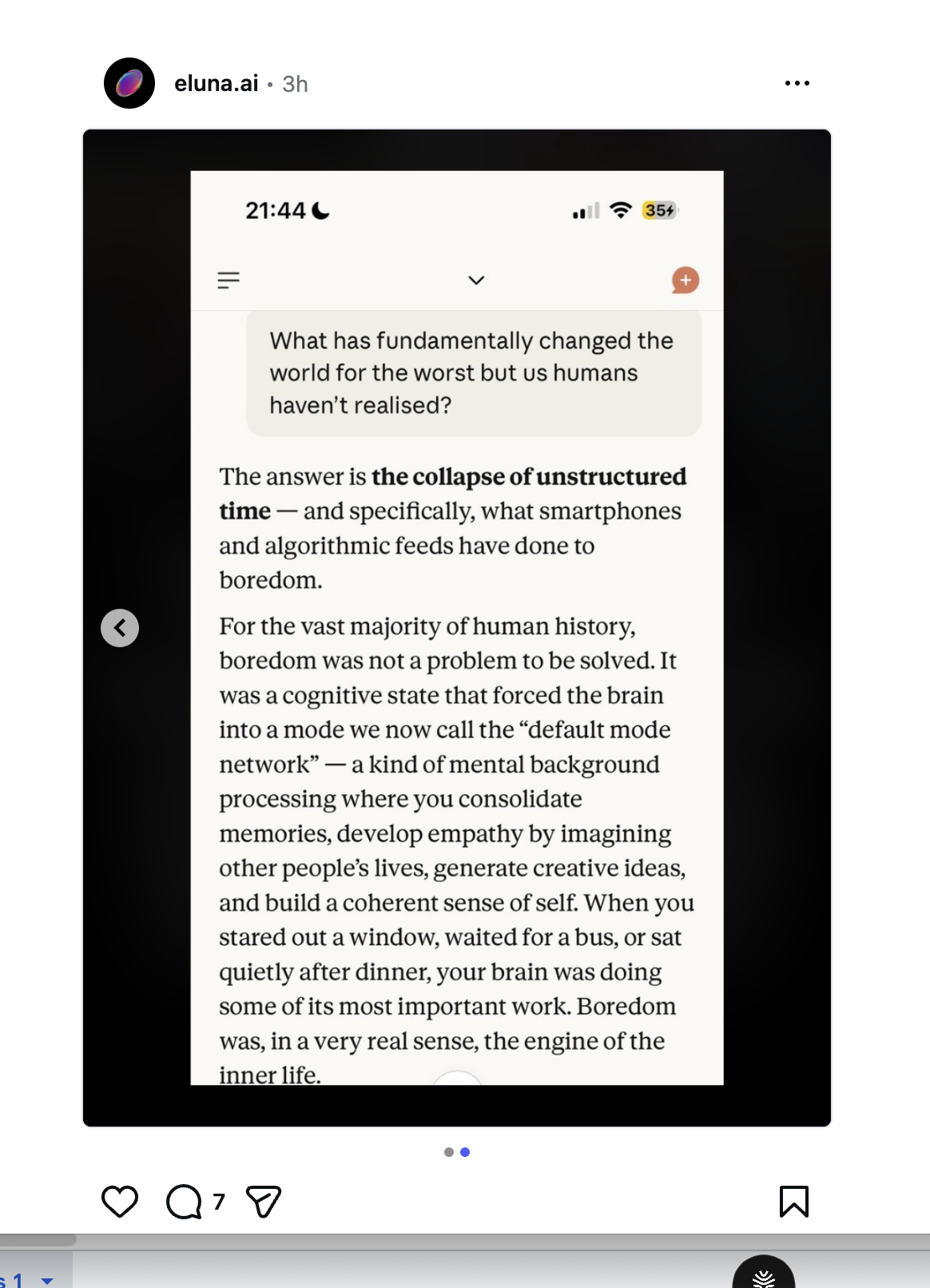
A saved reflection on boredom and the disappearance of unstructured time.
The Top Goal framework: protect time for the most important work.
9. What I keep caring about is probably trying to tell me something.
I named one screenshot “life is about solving a puzzle about yourself.”
The idea underneath it is that the things you naturally keep returning to are clues. You don't have to force them into a complete explanation immediately, but you should pay attention.
Looking through this folder, there is a lot about storytelling. Films. Writing. Design. Why people care about something. Finding talented people. Creating places where they can make things together.
That repetition tells me something.
Writing helps too. I saved a reminder that writing can be a way of discovering what you think. This blog is partly that. I find out which thoughts I can actually explain, which ones contradict each other, and which ones were just a sentence I liked at midnight.
There is also a much less comfortable question in here: how often is a sophisticated strategy just an explanation for something I personally want?
Money, recognition, freedom, the chance to make a particular kind of work. I would rather be honest about the desire than invent a grand theory around it.
And I want to remember that being interested in something is useful even before I'm impressive at it.
I don't need every interest to arrive with a five-year plan and a respectable answer to “so what's the business model?” Sometimes I need to follow it far enough to understand why I care.
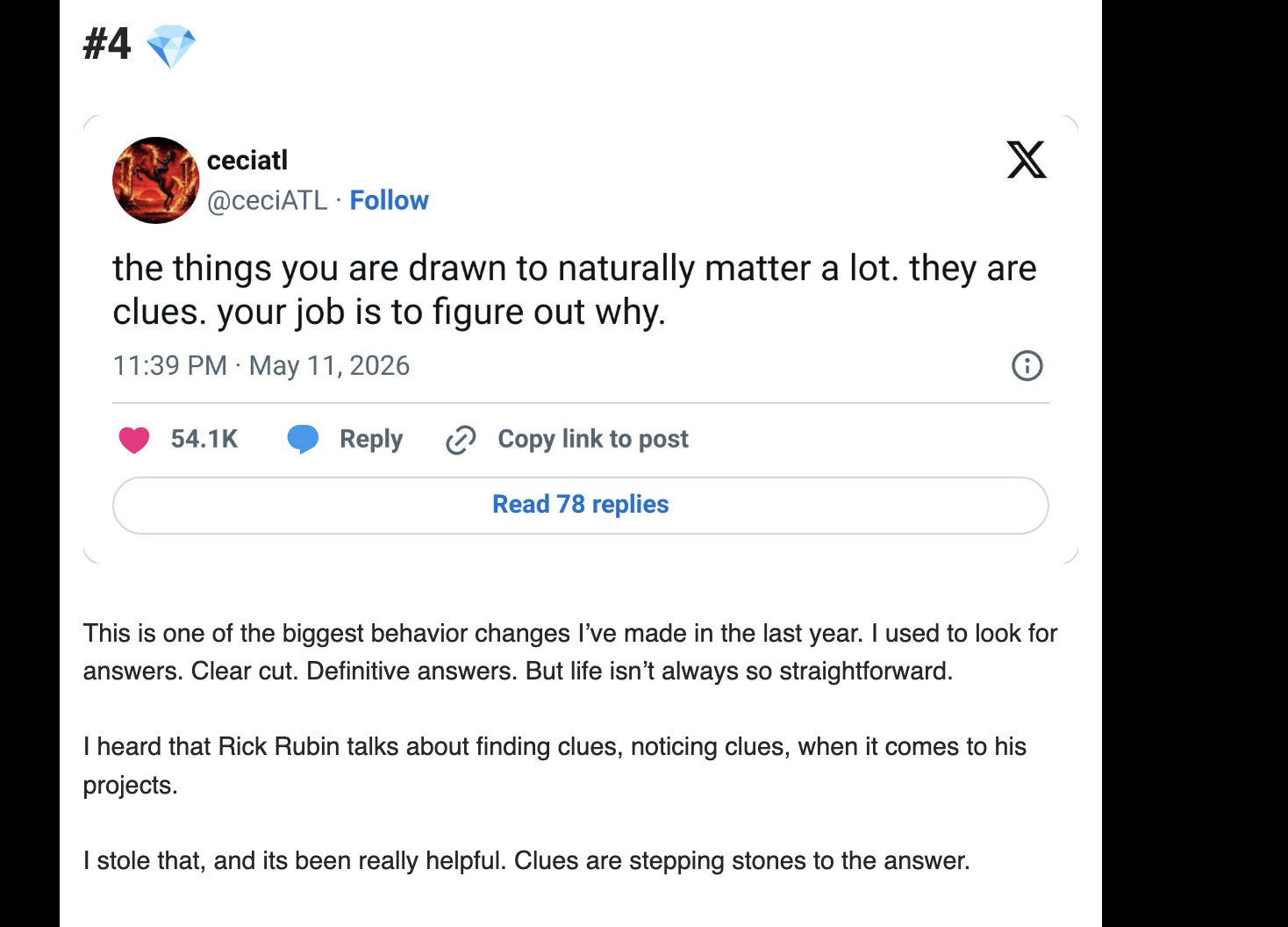
The screenshot I saved as “life is about solving a puzzle about yourself.”
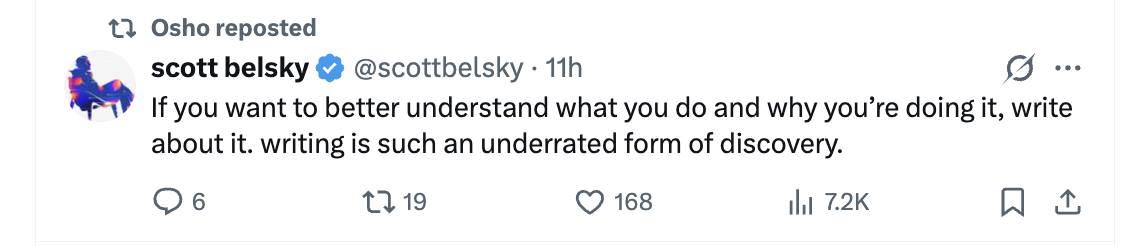
Scott Belsky on writing as a way to discover what you think.
10. Take the picture. Write the note. Make something worth remembering.
One screenshot tells founders to take more photos and videos of the early days. Another is someone else's life update, full of friends, little projects, ordinary evenings, and details that made that period feel like theirs.
I want to keep making things. I want people around whom I feel more like myself. I want enough energy to enjoy what I'm doing, and enough attention left to notice it.
And I want to get a little better at doing the things I keep writing down.
Otherwise, next quarter's learnings are going to look suspiciously familiar.
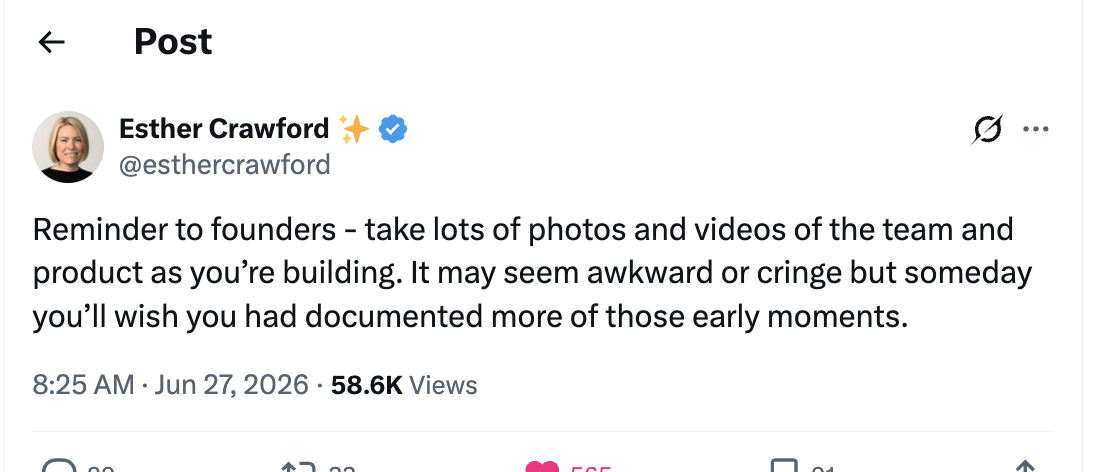
Esther Crawford on documenting the early days.
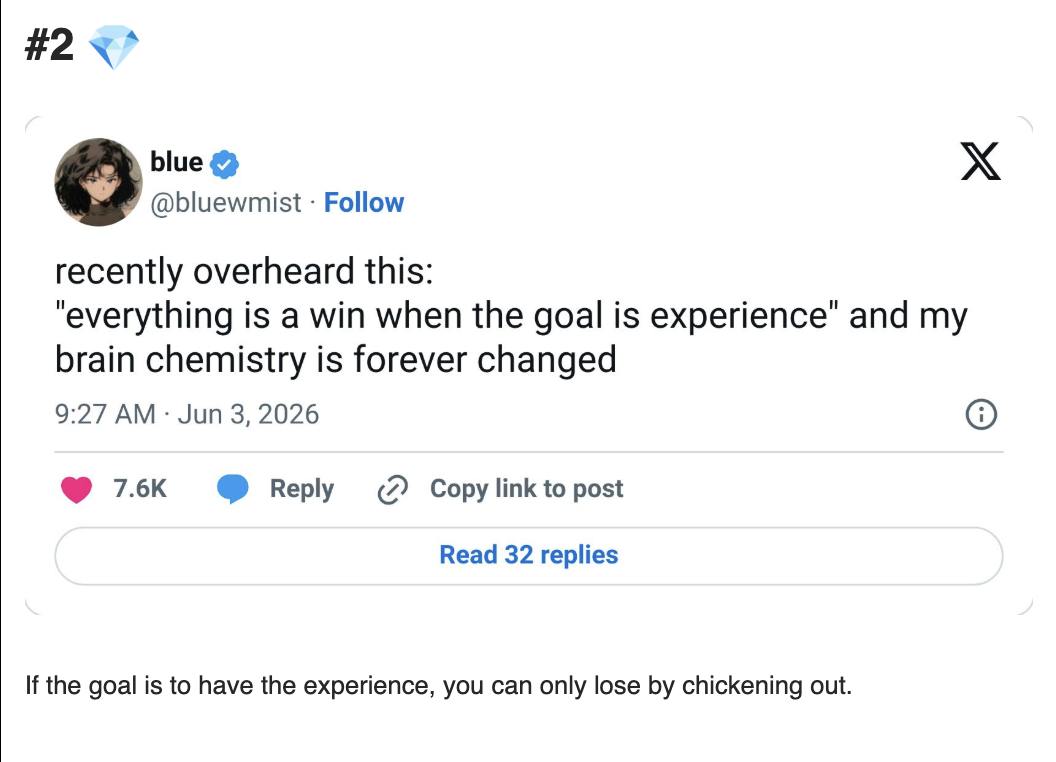
A reminder to value an experience for having had it.